
Announcing: ‘Cathedral Thinking’
A CLIMATE CHANGE SERIES

The Sagrada Familia in 1905
In 1882, during the Pontificate of Pope Leo XIII, the foundation of a church was laid in Barcelona. When the chief architect, Antoni Gaudi, died in June of 1926, the building was less than 25% finished. Finally, after a century of work the spire was completed in February of this year, reaching a height of 566’ (172.5m). One June 10—100 years to the day since Gaudi died—Pope Leo XIV blessed the Sagrada Família, which is now the tallest church the world.
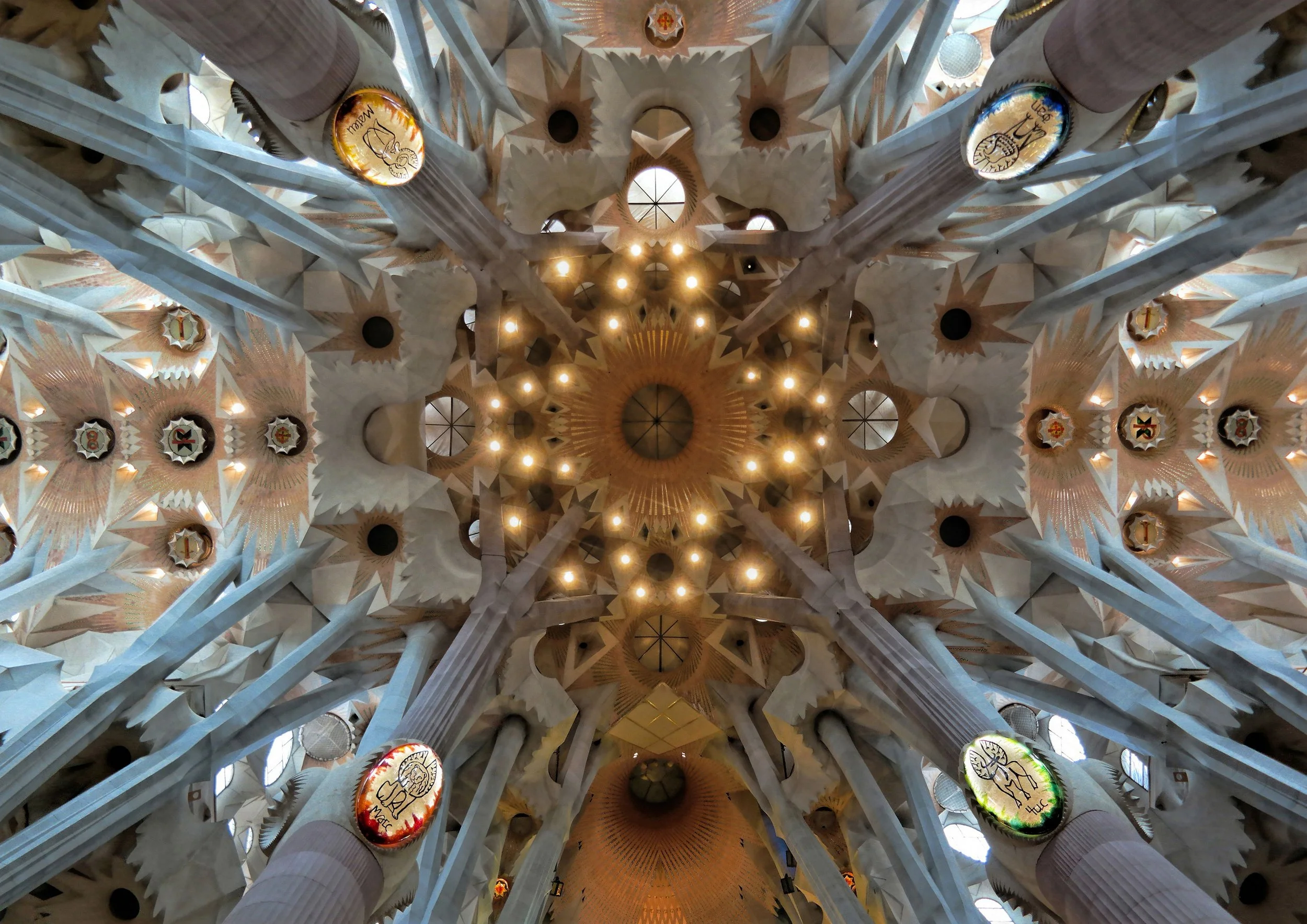
The ceiling of the completed Sagrada Familia, 2026
The completion of Sagrada Família is not only a monumental achievement in architecture, but a testament to the perseverance of the human spirit. So many people took part in the construction of this building, laying cornerstones and building facades knowing that they would never see the placement of the final pieces of the spire.
What can we learn from this enduring commitment in the face of countless setbacks, the Spanish Civil War, and vandalism? What work can we begin today that will be completed in a century?
Cathedral Thinking is seven-part blog series about anthropogenic climate change and the role the curtain wall industry must play in reducing the emissions from the built environment. We will explore how we can build on the the foundation of the Paris Agreement—which was ratified ten years ago and whose targets we are already missing—and what contributions we can make to the cathedral of work that is the effort to eliminate greenhouse gas emissions.
Part 1 is now live, and you can read it below.
This post explores the scope of operational and embodied carbon in the built environment in the context of global greenhouse gas emissions.